The biggest feature added this month is Journals. When you create a Journal, you enter the language you already know and the language you're trying to learn. From there, each new entry comes with a suggested prompt to get you started, and once you've saved an entry you can request an AI analysis of what you wrote.
Journaling has a significant impact on language acquisition — but for me, it's always been an intimidating process. I often write something in my target language, come back a day later, and have almost no idea what I wrote. I suspect that's common in the early stages, when everything still feels exotic and foreign. Give Journals a try and let me know what you think!
~~~
Progress feels slow, but it's happening. Over the last 30 days I've logged 34 hours and 11 minutes — just over an hour a day. Honestly, maintaining that pace is harder than it sounds; I've walked a fine line between productive immersion and being genuinely tired of listening to Japanese. I added time-tracking to Scribelate on February 5th, and since then I've accumulated 89 hours and 27 minutes.
~~~
Improvements I've noticed this month:
I can put together sentences when thinking to myself in Japanese. They're full of errors, but they're getting closer. Right now I'm still at the very basic level — "Good morning," "What are you going to do today?" "I am going to work today" — but that's further than I was. When I was at this stage with Spanish I found myself narrating my whole day in my head. I'm not quite there yet with Japanese, but I can feel it coming.
~~~
It's interesting — having built the tools in Scribelate, actually using them the right way turned out to be its own learning curve.
With vocabulary cards, for example, I used to stress out the moment the queue climbed above 30 or 40 cards, racking my brain on every single one. I don't think that's the right approach. You should know within a few seconds whether you recognize a word or not — and more importantly, if you don't know it, that's fine. It'll be there tomorrow. I can now zip through 60+ cards in 10–15 minutes.
I also used to agonize over how to rate each card: Again, Hard, Medium, or Easy. Those categories matter less than you'd think. The whole point is the repetition — if you mis-categorize a word, don't worry. It'll come back around, and when it does, you can rate it better then.
~~~
What progress looks like with Scribelate: you spend hours transcribing a podcast or video, checking and re-checking, transcribing and translating, until eventually you understand what it's about. It's slow and hard. But somewhere around 70 hours in, you'll come across a video and just get it — maybe not every word, but enough to follow along. And that feeling is kind of amazing.
I've been spending a lot of time with the Speak Japanese Naturally channel:
Specifically working through this video:
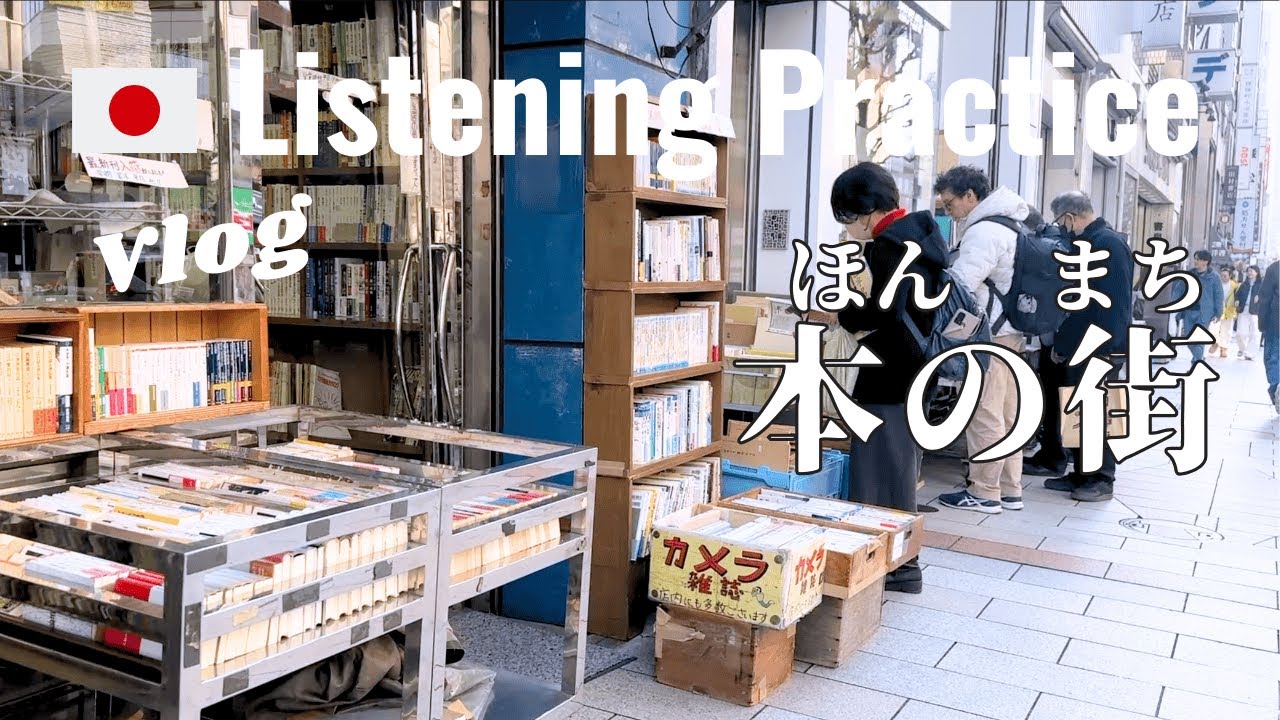
I stumbled across videos a few videos in the Comprehensible Japanese channel:
Specifically:

and

I was able to listen to them and understand them. Partly because they are very basic, but I couldn't have understood them back in February that is for sure. It is very cool being able to listen to content and understand it, even if it is very basic!